Carbide Power Skiving Spindle Rigidity: What to Confirm Before Tool Selection
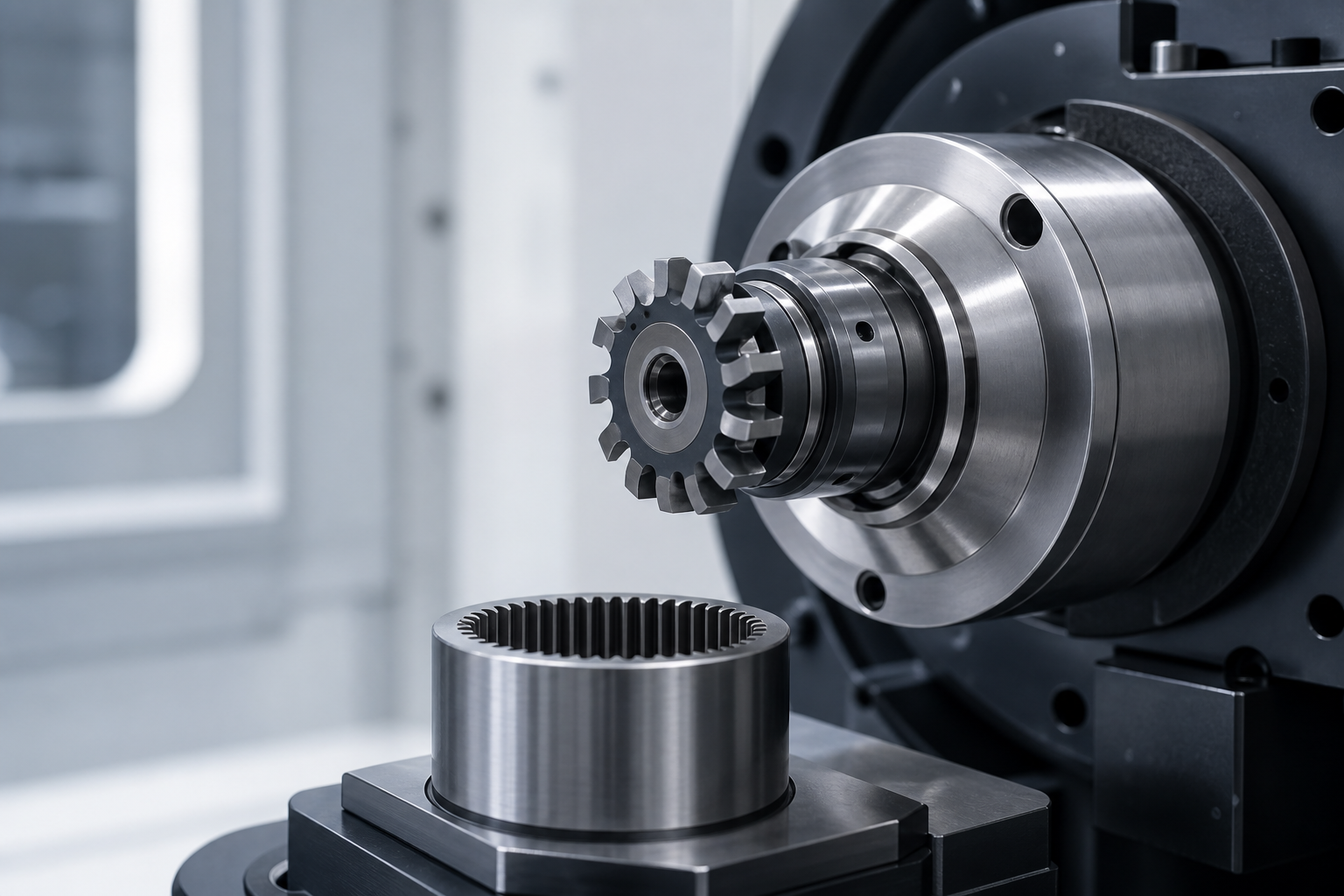
When an existing power skiving process shows vibration or edge chipping, asking for a carbide cutter alone does not resolve the selection question. For Nobeve W-Series carbide gear skiving tools, spindle rigidity is a stated application input: excessive vibration can readily lead to tool chipping.
The practical answer is to document the machine condition before a carbide package is specified. The W-Series description supports a review of the machine, oil cooling, workpiece condition and intended parameters; it does not support a performance promise from any one of those inputs alone.
Start with the documented W-Series operating context
Nobeve describes the W-Series as a carbide gear skiving tool compatible with gear turning machines and turn-mill centers. Its stated machining environment is oil-cooled, its recommended workpiece-hardness limit is at or below HRC 50, and its published cutting-speed and feed ranges are 120–300 m/min and 0.2–0.5 mm/rev, respectively.
Those are series-level reference conditions, not commissioning values for every part. Before transferring them to a job, confirm that the actual machine, workholding, gear geometry and process route match the proposed application.
Why spindle rigidity belongs in the first inquiry
The W-Series description identifies a high requirement for spindle rigidity and warns that excessive vibration during machining can easily cause tool chipping. That makes machine condition a selection input rather than a troubleshooting detail to supply later.
If chipping or vibration is the bottleneck, describe what is being observed and where in the operation it occurs. Do not convert the observation into a diagnosis or change the cutter material solely from an unverified cause. Ask engineering to review the evidence with the part and setup information.
Build a reviewable carbide power skiving tool request
Provide a concise machine-and-part record with the inquiry:
- Gear drawing and the required tooth geometry, including any relevant clearance constraints.
- Workpiece material, hardness value, hardness scale and the condition at the cutting operation.
- Machine type, spindle condition, cutter mounting and workholding arrangement.
- Whether vibration or edge chipping has been observed, and the current production bottleneck.
- Oil-cooling arrangement at the cut.
- Planned cutting speed and feed, to be checked against the documented W-Series ranges.
- Required accuracy and the proposed inspection requirement.
This record gives the application review a clear starting point. It also prevents a published W-Series range from being mistaken for a complete process specification.
Keep hobbing and power-skiving requests separate
If the requirement is a gear hob, identify it separately as either an HSS hob sourcing request or a carbide hob-selection request. Those are not interchangeable with a carbide power-skiving package, which needs its own machine condition and process review.
For the power-skiving package, state whether a W-Series carbide tool is being considered and provide the rigidity information above. If the machine condition, cooling arrangement or workpiece hardness falls outside the documented context, flag the request for engineering verification instead of assuming suitability.
Use symptoms to guide the next technical discussion
Vibration and edge chipping are useful signals to include in a tool inquiry, but the controlled W-Series description does not assign a universal corrective parameter change. Review the available machine and process inputs first, then discuss the condition with an application engineer.
For a broader troubleshooting checklist, see Power Skiving Troubleshooting: Parameter Adjustments for Common Quality Issues. That page should support the discussion, not replace an application-specific review.
Request an application review with the complete input set
To discuss a carbide power skiving package, send the part drawing, workpiece condition, oil-cooling information, machine and spindle condition, observed vibration or chipping, and the actual production bottleneck to the Nobeve engineering team. This lets the selection be checked against the documented W-Series conditions before tooling is specified.