Choosing a Gear Hob for Legacy and Low-Speed Hobbing Machines: Confirm Fit Before You Quote
When an older hobbing machine is still producing serviceable parts, replacing the tool is often easier than replacing the machine. The risk is treating “legacy” as a complete tool specification. It is not: the workpiece hardness, cooling method, achievable cutting speed, feed, required accuracy and actual part drawing still decide whether a hob is appropriate.
For an oil-cooled soft-gear application, Nobeve’s N-Series is documented for traditional low-speed hobbing machines. This guide turns that statement into a practical pre-RFQ check so an engineer or buyer can send the right information for review.
Start with the documented N-Series operating window
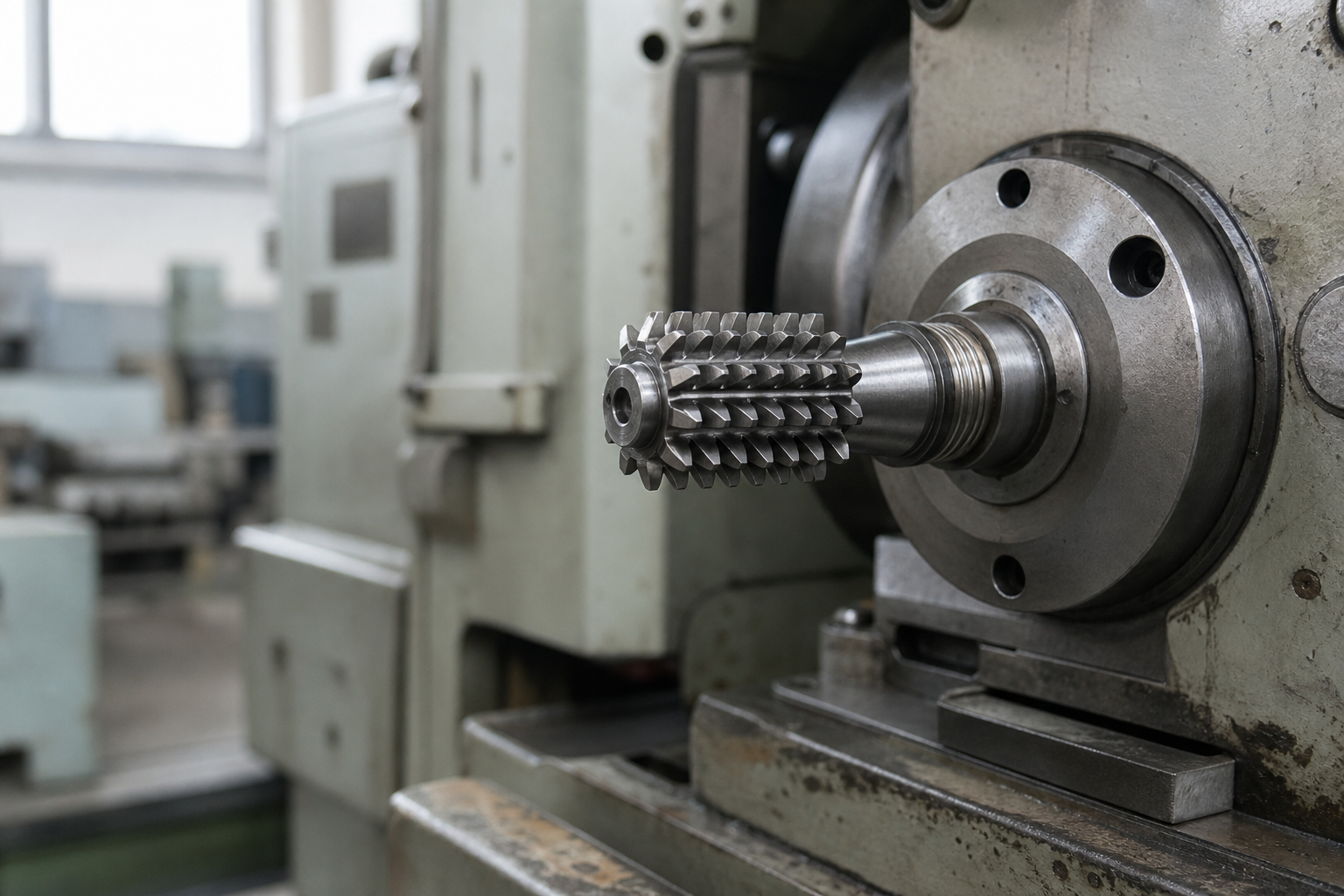
The N-Series low-speed soft-gear oil-cutting hob is a bore-type hob with a standard sintered tungsten-cobalt alloy base material and BALINIT® ALCRONA PRO surface coating. Nobeve documents it for traditional low-speed hobbing machines and also notes compatibility with high-speed hobbing machines.
Its published recommendation is an oil-cooled machining environment, workpiece hardness at or below HRC 30, cutting speed from 60 to 150 m/min, feed from 0.3 to 0.8 mm/rev, and DIN A or DIN AA accuracy classes. These are selection inputs, not production guarantees: confirm the final tool geometry and parameters against the part and machine before release.
Use this decision path before selecting a hob
1. Confirm that the workpiece condition is within scope
Record the workpiece material and hardness condition on the RFQ. The documented N-Series recommendation is ≤ HRC 30. If the hardness is unknown, measured in a different condition, or above this limit, mark the selection as needs verification rather than assuming the same series applies.
2. Confirm the cooling method and usable speed range
The published N-Series application is oil-cooled machining, with a recommended cutting-speed range of 60–150 m/min. Ask the production team whether the legacy machine can maintain the planned speed under the actual part load and whether its oil-cooling arrangement is available for the job. Do not substitute a dry or MQL process without an engineering review; that application is not established by this source.
3. Check the proposed feed against the documented range
Nobeve lists 0.3–0.8 mm/rev as the recommended feed range. Provide the current or target feed, along with the gear drawing and process sequence, so the proposed tool and starting parameters can be reviewed together. The source does not establish a universal feed for every module, material or machine condition.
4. State the accuracy requirement instead of using “standard quality”
The N-Series source lists DIN A and DIN AA accuracy classes. Put the required accuracy class on the drawing or RFQ, and identify the inspection method your team will use. If the customer specification uses another standard, include that requirement for engineering confirmation rather than attempting a conversion in the purchase order.
The RFQ information that prevents avoidable back-and-forth
For a useful review, send the gear drawing plus the following items:
- Workpiece material, hardness value and the condition in which it was measured.
- Required accuracy class and the applicable drawing standard.
- Current or target cutting speed and feed.
- Confirmation that the process is oil-cooled.
- Machine make/model, hob mounting information and any relevant fixture or clearance constraints.
- Gear data needed for tool design, such as module or diametral pitch, pressure angle, tooth count, helix information and bore or shank requirements.
This is deliberately an input checklist, not a claim that every older machine has the same capability. Machine condition, setup and part geometry still need review before a final recommendation.
When an N-Series request needs further verification
Pause the selection and request an engineering review when any of the following is true:
- The workpiece is above HRC 30 or its hardness condition is unclear.
- The process will not be oil-cooled.
- The planned speed or feed falls outside the documented range.
- The required quality level is not DIN A or DIN AA.
- The drawing, inspection requirement or mounting details are incomplete.
These are not rejection criteria by themselves. They identify where the available N-Series description does not provide enough evidence to approve a tooling choice.
Next step: turn the machine details into a reviewable tool inquiry
If you are comparing options for a small batch or an existing machine, see Nobeve’s gear tool selection guide for small-batch production for a broader decision framework. When you are ready, send the drawing and the checklist above through the Nobeve contact page so the proposed tool, geometry and starting conditions can be checked against your application.